Balls and Walnuts
more than you ever wanted to know
Monthly Archives: October 2010
They keep getting . . . older?
Our first inkling that this was a different sort of Halloween came when Jake answered the door for our first trick-or-treaters, and we could hear a very bass TRICK OR TREAT shaking the windows. Okay, that’s hyperbole, but the point remains we had an older crowd tonight. And I’m not talking high school students.
We live near Cal State Bakersfield. At least half of our trick-or-treaters were college students. And while I have no objection to feeding starving students (nor do I mind the sight of voluptuous trick-or-treaters), still, I was speechless when one young woman asked if I had anything microwaveable. Because, you know, we live in the dorms.
My first thought was, What, you want a Lean Cuisine? But I merely stammered something like No, all we have is junk food.
Only later did I think that I might have pointed out: Really no reason why you can’t microwave those Reese’s Peanut Butter Cups.
D.
Me, royalty
Okay, another dream.
As usual, my whole waking life has been compartmentalized, zipped up, locked away. The fact that the princess looks suspiciously like my audiologist from Santa Rosa, or that the friend who offers to loan me his corduroy jacket happens to be my best friend/partner from residency — none of that matters. This is a Doug I do not know, a first or second year med student too concerned with some late-arriving textbooks from Amazon to obsess over a date with royalty.
It’s more than a mere date. We’re engaged. The marriage is imminent. I’ve survived the rehearsal dinner, which oddly enough preceded the wedding by more than a few days, and now I’m to participate in another dinner, attended by the Queen-to-be (I will be — what do you call it — her consort?) and her top advisers. It’s a different sort of rehearsal dinner wherein my intellect may well be on stage; it will culminate in an exchange of wooden rings polished smooth by generations of blue-blooded newlyweds, followed by yet another rehearsal, my first bedding of the princess, conducted prior to the exchange of vows I suppose to ensure survival of the bloodline.
Only problem is, I’ve been too focused on the events of the day (my classes, perhaps a test or two, my missing books from Amazon) to pay much heed to the evening, and as the hour approaches I find I’m dressed in sneakers, shorts, and an old tee-shirt. No way Ill have time to make it home and change into a suit, and I know that on the grand scale of unforgivability, no-showing this dinner will rank much worse than down-dressing. Not by much, perhaps. But I really have no other option, I have to be there. Now.
I pass my friend on the way to the dinner and he sees I’m in a panic. There’s a quick exchange of information, but he doesn’t have a suit squirreled away in his car. He does have a corduroy jacket, an old rough thing good for keeping a body warm but not high-ranking on the style spectrum. A hair better than my tee-shirt. But the effect of the heavy jacket with my Bermuda shorts is ridiculous, so I go to my doom with the clothes on my back.
She’s on the steps with her entourage and she’s the picture of elegance, looking every bit like a woman who would lead or at least provide a remarkably attractive figurehead for a nation. She didn’t dress down for this dinner. And to her credit, she seems far less bothered by my appearance than I am. “I can go run and change into a suit,” I tell her, knowing well that I can’t do that without delaying dinner for the better part of an hour, but she smiles and says, “Oh, no, I like your furry legs!” and that’s that.
Maybe that’s my place in this whole affair. The royal line is too inbred and they need some new blood. Swarthy Jewish blood with short hairy legs.
As if to confirm this suspicion, the first course is an appetizer of chopped liver. Meanwhile, one of the princess’s advisers is arguing with another adviser about some common-wisdom advice on nutrition and dieting. They turn to me, the medical student, to settle the dispute, and I’m in a sudden cold sweat: Don’t you know they teach us nothing about nutrition in med school? But I bluster my way through an explanation, sure I’m failing this test — I’m a font of stammers and incomplete sentences and self-contradictions. I’m a bag of rough edges. All the while, my betrothed beams at me.
Waking up, I realize that my stylelessness and lack of Windsor polish is precisely what she wants in a consort.
D.
I’ve been plagiarized!
Or is it plagiarised? I always have trouble with that. My spell check says z, not s.
Hat tip to new reader Andrea, who somehow figured out that this article on EmpowHER is a pretty thinly disguised regurgitation of this article on my website (which also appeared on allHealth.com, and may still be up there for all I know). The author has added a great deal of editorial input, thus justifying her byline. My “Mumps, for example,” has become “For example mumps.”
I’ve written to the website’s feedback email addie . . . we’ll see if anyone replies.
In other news, I finished Jonathan Lethem’s Motherless Brooklyn tonight, and WOW. Here’s a protagonist that keeps living when the book is done. I keep picking it up, rereading the ending, bits from the beginning; but nothing I do is going to make Lethem write a sequel. Motherless Brooklyn was pubbed in 2000, so if Lethem hasn’t written a sequel yet, I don’t know that he ever will.
Per Wikipedia, there’s a film in the works:
A film adaptation of the book, set in the 1950s, is in development and is planned to be released in 2013; Edward Norton will direct, adapt, and star in the film.
Ugh. 2013? Anything could happen between now and 2013. And who’s Norton going to play in this? I hope he’s smart and casts himself as Frank Minna, the father-figure who ends up dead at the end of Chapter One. I can buy Norton as Minna. I can’t buy Norton as Lionel, the Tourette’s-afflicted protagonist.
In still other news, our Giants are walking away with game one of the World Series.
D.
The City & The City
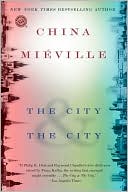 The City & The City by China Miéville, 2009. I’ve perhaps mentioned once or twice that China Miéville has left me cold. I couldn’t finish King Rat or Perdido Street Station, and after dropping cash on those two books only to be disappointed, I’d kind of put him off my radar. I’m not sure what led me to check up on him again after all these years, but I’m glad I did. The City & The City was a great read — a technically proficient hardboiled mystery and also a provocative fantasy (or anti-fantasy, an idea Miéville kicks around in the end-of-book interview).
The conceit is that two cities, Beszel and Ul Qoma, coexist in the same space. This is far more a psychological separation than a physical one, however, since there are areas which are purely one or the other, and areas where the two interleave. From an early age, denizens of either city are taught to un-see the cars, pedestrians, and buildings of the other city. To screw up — to breach, in the novel’s parlance (think “breach of etiquette”) risks invoking a police force that exist hidden from both cities: the aptly named Breach.
Our first person narrator is Inspector Tyador Borlú of the Extreme Crime Squad, a Beszel native investigating the murder of a young woman whose body, we soon learn, has been transported from Ul Qoma and dumped in Beszel. This should be a clear case for Breach, and Borlú would like nothing better than to make his case for Breach and wash his hands of the case. But of course others have different plans.
The prose at times is often spare to a fault, but lush at other times, and full of idiomatic and dictional oddities that suggest translation from another language. Miéville’s comments indicate emulation of Raymond Chandler, but I think Hemingway may be a more apt comparison. Borlú’s a likable enough protagonist, but we’re given precious little window into his thoughts beyond the working of the case. Chandler’s Marlowe was far more revealing: we knew the man’s value system, after all, and I’d argue that if we didn’t, he wouldn’t be Marlowe. Borlú wants to see justice done, but aside from that, I don’t know what he wants out of life.
That quibble aside, Miéville has done some remarkable world-building, and his characters live and breathe, and his plot is as well crafted as any jigsaw puzzle. What more could you want? Yes, I wish I cared more about Borlú. Emotional distance must have been a conscious decision on Miéville’s part since it would have been easy enough to humanize the man.
Oh, and Miéville didn’t answer every last question his novel raised . . . which would be fine if he intended a sequel, but his interview discusses only the possibility of prequels. But I guess I don’t need to know everything, since the mystery itself was explained in full.
Now I’m wondering whether to go back to Miéville, perhaps give him a chance with his new book Kraken, which seems to be an homage to H. P. Lovecraft. Guess that’s what Amazon’s “Look Inside” function is good for, right?
D.
At least part of the allure
In retrospect, I took a haphazard approach to writing. My goals varied with the season or with my current project: finish a novel, get something published, get something published in print, get a novel published. I’ve managed all but the last and I know (mostly from reading Kate’s blog) that even if I succeeded at that, it wouldn’t end there, it would likely never end.
So I’m goofing around trying to kill three hours while Jake satisfies a bit of his school’s community service requirement. While he runs a concession at a local church fair, I’m in an old Woolworth’s. Still sports the name but inside, they’ve converted it into one of those multi-vendor antique stores. You know the type: they sell LPs and 45s, back issues of LIFE or Popular Mechanics, grandma’s china, great-great-grandma’s china, countless tchotchkes, tinder-grade furniture, pocket watches that don’t work, jewelry that has gone in and out of fashion a half dozen times since it was first crafted.
And books. Innumerable series of “great classics” — Ibsen, Voltaire, Flaubert. Hard cover first editions of the last thirty or forty years. And the only interesting thing, to me: musty brown-leaved fictions by authors long-dead and long-forgotten, with oddly boring names like Where Men are Men and Pandora Opens the Lid, or dog-eared pulps with Murder in the title. There may be some gems among them; who knows? If you tried to find the author on Wikipedia you’d likely be at a loss, and even the Amazon booksellers would probably scratch their figurative heads.
It seems to me that the desire to write would not stop at the success of publication. That merit badge would be shelved and another grander one desired: to be immortal. To not be the author of The High Cavalier’s Lady, but of Lady Chatterley’s Lover.
I don’t imagine this is every author’s dream; I’m sure some would be delighted simply to know financial success, to be able to make the pin money or, gasp, quit the day job. But no one does this who is not also a lover of great books and an appreciator of great writers. Can I be forgiven such a grandiose dream, even while struggling to write a daily blog? Well, it is what it is. You can’t censor your dreams.
D.
More Madeline
Continuing yet again my son’s education with Blazing Saddles. I haven’t watched it all the way through since the movie first came out, when I was what, twelve? I’d forgotten a great deal of it, which was cool, in a way. Like watching it (almost) for the first time.
Much appreciated by my son, although I think we all disliked the meta BS at the end. Thank heavens Brooks didn’t pull that in Young Frankenstein.
Oh, YouTube has embedding disabled for damn near every Blazing Saddles clip, so I couldn’t give you Madeline Kahn’s musical number. You’ll just have to click on the link above.
D.
National treasure
Here’s a video clip of Stephen Colbert on The View. I think this is the first time ever that I regret not recording that show.
Sorry, I don’t seem to have much to say lately. On the upside, I’m making progress gestating a new novel. The world-building aspects are going well, but when it comes down to plot details, all I’m getting is trite shit. Oh, well. Build the world and the rest will follow, I hope.
Oh and this was fun: ever how the slang word “bugger” originated?
D.
Squashed potatoes
. . . or as Cooks Illustrated calls them, “Smashed Potatoes.”
These came out great and were really very easy to put together. Buy a bunch of little potatoes, 1.5 inch to 2 inches diameter. They recommend the little red ones but I bought the little yellow ones. Two per person should be more than adequate as a side dish.
Preheat your oven to 500 F. Yes, 500 F. These potatoes are forged in hell.
Line a cookie sheet with foil. Add the potatoes and about 1/3 cup water. Cover with foil and crimp the edges. Pop it in the oven for about 30 min, or until a knife easily pierces your largest potato. For my potatoes (which were more like 2.5 inches diameter), it took 40 min.
Remove the foil and carefully flip your potatoes — they’ll have begun to brown on the bottom. Coat all over with olive oil (a paint brush helps). Smash each potato with something heavy. Cooks Illustrated recommends using another cookie sheet to smush down the potatoes all at once; I used my 4 cup Pyrex measuring cup.
Now slather onto each potato even more olive oil. Add salt, pepper, and a pinch of thyme to each potato.
Pop back into the oven until everything looks good and crispy. Cooks Illustrated did 15 min on the top rack, 20 min on the bottom rack, but this seemed like overkill. I took mine out after the initial 15 min on the top rack and they were wonderful — crispy on the outside and bottom, tender on the inside.
Yummy!
And aren’t you proud of me? I found a YouTube video featuring live maggots in some poor soul’s nose, but I posted this recipe instead.
D.
Over-reaching
On the road yesterday, some perverse whim took hold and I channel-surfed the radio until I heard a dynamic speaker with a British accent holding forth on the Book of Daniel.
The Book of Daniel, you may recall, is one of the Old Testament’s more hallucinatory tales, rife with symbols and prophecy. Call Daniel the Old Testament’s Nostradamus, or perhaps its John. What piqued this speaker’s interest was the Book’s warm-up, in which King Nebuchadnezzar of Babylon has a disturbing dream, summons his wise men, and demands an interpretation — without sharing with them the contents of the dream.
The Chaldeans (Neb’s usual band of wise men — whom this fine speaker equated with “the top men of Oxford, Harvard, Yale, Berkeley!”) rightly tell the King he’s being kind of a dick, that no man can interpret a dream without knowing the nature of the dream. Nebuchadnezzar sentences every last wise man to death. When the head of the king’s guard comes for Daniel, who is one of Babylon’s wise men, Daniel does some fast talking, buys some time, enough so that he can go to sleep and dream the King’s dream for him AND come up with the interpretation. Fast thinker, eh?
The interesting aspect to all this was the British speaker’s spin. He interpreted the Chaldeans’ failure to mean that the wisest men in the world cannot know anything for certain — that only God (who provides Daniel with the dream and the solution) can know anything. And thus we must look to God for knowledge and not to our own wise men who cannot, in the final account, be trusted to have any stock in Truth.
At this point, I hear the Church Lady’s voice in my head saying, How convenient. Because if we can’t trust our wise men, who can we trust? Duh: God’s messengers on Earth.
And at the same time I realize that I’m hearing something expressed in the most bald-faced manner possible, something that has characterized organized religion probably from its inception: the deep suspicion of, if not loathing for, men and women of learning. I’m a fly on the wall looking on as Galileo is shown the implements of torture. I’m watching helpless as women schooled in herbal medicine are dragged off and burned as witches. I’m lurking in the back of a dozen or a hundred fundamentalist congregations, listening to the preacher deride Darwinism (or global warming, or name your theory du jour) as sophistry, as no more than a belief, as requiring faith, as being a religion unto itself, and what did God say about worshiping other Gods before Him?
(Um, not exactly.)
I’ve always known that organized religion was a hell of a lot more about control, power, and money than grace, forgiveness, and salvation. But this was the first time I ever witnessed a preacher so obviously tip his hand to that reality.
D.